Star Fox 64: Design Mission Accomplished

With the recent releases of narrative driven AAA titles such as Bioshock Infinite and Mass Effect along with the next-generation looming on the horizon, the discussion of game design has yet again taken center stage. Large publishers are looking to balance the addictive re-playability of MMOs, the lucrativness of multi-player FPSs, and the rich immersion of single-player action-RPGs. On the other hand, indie developers such as thatgamecompany toy with the idea of striped down mechanics to balance heavy narrative as seen in Journey. Most games now attempt to implement “moral” decisions, often very polar and very poorly.

With today’s technology, possibilities seem limitless for gaming’s next-generation. However, as the past will show, limits without powerful hardware, online connectivity, and large player communities, can provide some of the best work! As untimely as it may seem, developers should look to games of the past for inspiration on the undiscovered future.

Example: Star Fox 64.

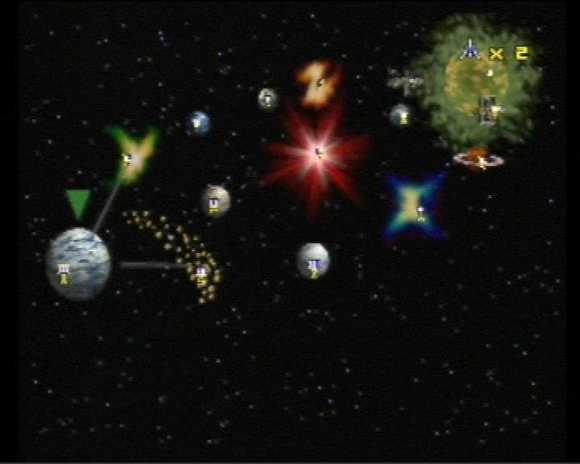
Star Fox 64 Nintendo 64 map of the Lylat System

Star Fox 64 championed the idea of a branching, non-linear “linear” story. As one may recall, the map shown above is presented to the player at the onset of Star Fox’s journey. And, as most players began to discover, there remained a plethora of unvisited planets and galaxies by the game’s end.

Without access to GamePro or online resources, most couldn’t quite figure out why those extra stages existed or how to reach them. Those gung-ho enough to research, attentive enough to listen for, or lucky enough to stumble upon the difficult but more rewarding progression, could reap the rewards of a richer story, unique mechanics/vehicles/characters, and largely undiscovered levels. Buddhist like patience rewarded the mastery of repetition.

The beauty of this design lies in the fact that Nintendo developed a game of which 50% would remain untapped by many players. Nintendo taunted the player with what could be, teasing them with evidence of something more, and tucked mystery into each level with hidden paths and special instances. Choices made earlier in the game would not only effect Fox’s path but offered different consequences in future levels including character cameos and extra help. They even built an entire mechanic and vehicle class, The Blue Marine, used on one level found on the hard path, Aquas.

Nintendo also innovated on the standard “difficulty selection” cliché that is still often used in today’s games. Star Fox 64 tailored the game’s difficulty to the player’s ambition. If one was deft enough to unlock a level’s secret path, they were rewarded with a more difficult stage rather than just increasing health of baddies or offering enhanced AI. As Star Fox 64 displayed, baking in difficulty based on a player’s abilities and determination allowed for Nintendo to create a unique path without compromising the integrity of the game’s intended balance.

Star Fox 64‘s design may not be the exact answer the future of gaming needs, but it’s innovation is. Multi-path design, story changes based on accomplishments, a unique take on difficulty settings, and it’s ability to tease players with stages that require the practice and precision only replaying can offer are the sort of out-of-the-box thinking the industry needs in this time of change.

While Bioshock and Bioshock Infinite provide fantastic narrative, their mechanics and level progression never quite impress like Super Mario 64 or Final Fantasy X of yesteryear. Call it age, but the feeling that the limitations set for developers in past provided more opportunity for unique game design seems to be ever present.

Risk is worth it. Even if a small few seek out all of the secrets of a game, it will ensure that it continues to be replayed, rediscovered, and re-loved. Defeating the tropes players are continually subjected to and letting the game unfold around the player’s accomplishments and mindful exploration provide an infinitely more rewarding experience.

Journey: 1 Year Later

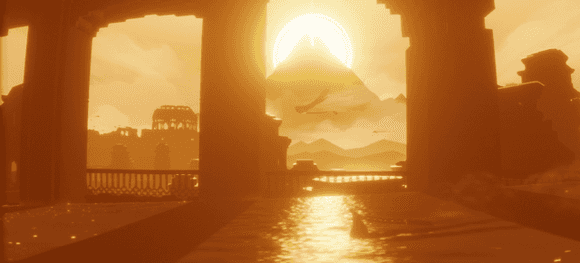
Journey

Celebrating this generation’s most important work of art.

Released to the masses on March 13, 2012, thatgamecompany‘s Journey re-ignited the “games as art” argument. It’s beautiful and ethereal depiction of companionship, mystery, communication, evolution, and post-apocolypse paved the way to its chart topping success, numerous awards, and a Grammy nomination; a first for the video game medium.

One year later, Journey continues to top Playstation’s charts, peaking during awards shows and best of lists. Amongst heavy-hitters and AAA titles, Journey’s legacy continues.

There is also the outstanding success and importance of Journey’s soundtrack. Composed by Austin Wintory, the soundtrack sprawls from eerie tension to a warm enlightenment, as demonstrated by tracks “Nadir” to “Apotheosis”. Wintory’s score went on to win numerous awards, dominating the Best Music/Audio category of nearly every video game award ceremony and became the first video game soundtrack to be nominated for a Grammy. One may argue that the standalone success, sweeping hooks, and inspiring melodies of the score continue to draw players to Journey and open conversations to new audiences.

With all of it’s gravitas and praise, Journey is not without its nay-sayers. Many refute the piece as a “best of” contender due to its lack of traditional gameplay. Even I, an avid fan of the experience, struggle with the “games as art” argument and have the idea that we need to reevaluate our definition of “game.” There is no doubt in my mind that Journey is a profound piece of art, but does it qualify as a game?

“Journey’s primary mechanic was to move the player from point A to point B and tell a story and show off scenery. The puzzles are simple. The threats are sparse. Consequences are inconsequential.” – Kyle Starr, IGN.com

Regardless of one’s feelings on whether Journey can be classified as a game, the experience is one that challenges our opinions of the world and each other. Clocking in at roughly 2 hours of intimate gameplay, Journey is best left as a solo experience to be completed in a single sitting, similar to a movie. The themes previously mentioned are deep and subtle, something we’ve come to expect from novels. And the score not only moves the story but, like the world’s most important classical pieces, can be enjoyed apart from the visual experience.

One year (and one month) ago, Journey redefined art and interactive entertainment. It challenged storytelling, world building, and character evolution. It goes without saying that Journey is one of few crowning achievements of our modern society that should be experienced by all, gamer or otherwise.


Journey’s PSN rank since launch. The following sales data as reported by the official Playstation Blog:

Top 20 PSN/Retail Games:

2013

2012

Identity Crisis: Kids Know Best

Why are you who you are?

Kyle TMNT

I have been struggling with my professional path. I’ve poured countless hours into personality tests (MBTI, enneatype, etc.), asked close family and friends what they envision me doing, and have tried my luck exploring various professional and creative avenues (music, marketing, writing, programming, etc.) with little to no epiphanies. Days go by with my ego smashed and I’m left upset that others feel the wrath of my lack of self-confidence and drive. But I may have found a fix…

To center myself, I have begun to explore my childhood hobbies.

At my lowest point, I find solace in my earliest childhood memory playing Mega Man 2 on the original Nintendo Entertainment System. Not only do I mark this as the beginning of my fascination with video games but my obsession with technology and mystery altogether. The ability to control an 8-bit sprite paired with the question of how Rockman would adopt a boss’ weapon paved way to the foundation of my creativity.

I spent many years prior salivating over LEGOs, namely the $99 flagship models. Even now, I’m having overly fond memories of the Ice Planet 2002 “Deep Freeze Defender” and Blacktron 2 “Aerial Intruder”. Sure, I’d play with the sets after completing them, conducting a war between the knights of the “Royal Knight’s Castle” and the thieves of the “Dark Forest Fortress”, but more importantly, the idea of creating something new from an incomprehensible cluster of pieces into a formidable kingdom subconsciously encouraged my building and storytelling skills.

Away from toys and video games, I spent plenty of time in front of the TV. While I enjoyed several Nickelodeon TV shows such as Guts, Legends of the Hidden Temple, Nick Arcade, Double Dare, and Wild & Crazy Kids. I (like many) absolutely adored the Teenage Mutant Ninja Turtles. Even today, I can recite every piece of dialogue, mimic every sound, and predict every special effect from the original 1987 series. As tickled as I am that the TMNT have found their way back to the limelight in the forms of a CG cartoon, toys, comics, video games, LEGOs, and (soon to be) a film, I am more excited that today’s youth can experience the lessons of family, humility, leadership, intellect, passion, and humor as I did when I was a kid.

In all, when I find myself in a funk, unsure of the next move to make or how I found myself in the position I am in today, I think back to how it all started. Like most, I enjoyed video games, but was drawn to the technology and mystery within them. Like most, I enjoyed LEGOs, but I discovered storytelling and handy-work. And, like most, I fell in love with a cartoon, but I found love, family, and identity.

While I spend the majority of my days searching for myself, my passion, and my next professional endeavor, I take comfort in understanding my foundation. It gives me pleasure assisting customers in the tech world, helps me bridge the gap between a geek and a people person, and grounds my interests in the tech and media/communication fields.

My challenge to you: Think back to those activities you loved as a child and consider why you loved them. Without a doubt, some of the answers you’ve been seeking lie within your fond childhood memories.


Originally published at TheStarrList.com

Editor’s Choice: EDGE Extended

EDGE Extended

What is seemingly simple on the outside may spike your nostalgia on the inside.

Like many, I am often guilty of falling head over heels for media that pays homage to my childhood hobbies. In the case of video games, very few have been able to tap into my childhood gaming roots like that of Mobigame‘s EDGE Extended. While the game may be an additive to the original EDGE, it succeeds as its own title.

Gameplay

EDGE Extended’s core objective is to move your cube from point A to point B as quickly as possible without falling off of the edge of the level, all the while collecting prisms on the way. Your cube’s movement consists of crawling along the ground or scaling other cubes of the same height within a level’s layout. Boundaries are not forsaken therefore one false move could put you over the edge, racking up your death count, and harming your final score.

Level scoring ranges on a scale of A to D with special S (Professional) and S+ (EDGE Master) rankings based on completion time, prisms collected, and number of deaths (or lack thereof). Hang-time bonuses are given when the player holds the balance of their cube during mid-climb without completing the climb completely, a la manuals/grinds/plants in Tony Hawk’s Pro Skater.

Each level offers a unique design and mechanics that keep the player riveted and guessing. The rate at which this simple 3D game is able to innovate is mind-blowing, offering unassuming players nostalgia of their first play through of Super Mario 64. Many popular platforming mechanics are aplenty throughout each level such as triggers that open bridges, temporary floors, shadow cubes, and even a Morph Ball-esque ability that provide additional challenges in reaching the each level’s goal.

Visuals

EDGE Extended’s visuals are reminiscent of the original TRON: blocky, greyscale level design sprinkled with lines of glowing hue. At initial glance, the game may seem a bore, however it’s perfectly timed moments of shimmering colors send the mind racing back to a time of ’90s-era sparkly stickers and Lisa Frank products, perfect for today’s aging gamer.

Sound

Simply put, the sound design is sharp and smart. A plethora of shimmering chimes move the player through the menus while the soft cushioned thud of the cube satisfies the auditory sense. If that is not enough, the EDGE Extended soundtrack pays homage to the 8/16/32/64-bit melody heavy video game scores of yore such as Sonic the Hedgehog, various menu music, and Super Mario 64 (I may be obsessed with this game…).

Overall

EDGE Extended is a love letter to historic platformers, memorable mechanics, and the video game music of yesteryear in the form of a casual iOS game. EDGE Extended is a game worthy of a $30 price-tag offered for only $3!


Trailer

https://www.youtube.com/watch?v=hfpv-18KKZw&feature=emb_title

EDGE Extended is available for iOS on the App Store.


Originally published on TheStarrList.com

2013: The Year of 4K

If CES 2013 has proved one thing, it’s that 2013 will be the year of 4K. SonyLGSamsungSharp, and Panasonic have all announced that they will be releasing 4K TVs in 2013. If you are unfamiliar with 4K, check out Wikipedia. In short, it is a screen resolution 4 times that of your 1080p HD TV. It is also standard that digital cinema is delivered in. When you brought your children (and yourself) to watch Wreck-It-Ralph this fall, chances are it was being delivered to you in 4K. But aside from this, why am I so excited about the advancement?

When Apple released the redesigned iMac line in 2009, it opened my eyes to a greater offering of pro-sumer grade products. I was amazed at the amount of pixels in the iMac’s IPS enabled LCD displays. Apple decided that it’s most popular desktop line would not rest on the laurels the industry set at 1080. Instead, they decided to redesign their all-in-one desktop with a display capable of a native resolution of 2560 x 1440. Thus began my inkling that the time of 1080 would be nearing its end.

In 2010, two key technological advancements hit. In June, Apple released the long awaited iPhone 4. Aside from its gorgeous design and custom A4 processor, it housed a 640 x 960, 326 ppi Retina display; a consumer electronic smartphone with pixels smaller than the naked eye can distinguish at optimal operating distances. I was fortunate enough to take one home the evening of its launch and, to my surprise, I had a hard time falling asleep. I kept waking up to unlock my iPhone as if I had never seen one before. This display was nothing I had ever fathomed. At this point I knew displays would not be getting clearer than this. Only larger. A plateau had been reached followed only by iPad (3rd generation) and now the MacBook Pro with Retina display; bigger displays.

Shortly after, in July of 2010, YouTube released a playlist of 4K streaming videos. While it goes without saying that a majority of the public did not have access to the 4K resolution projectors and/or displays needed to view these natively, these videos did shake the Earth in terms of size. Each video clocked in at roughly 2 minutes and took nearly 10-20 minutes to load, opening our eyes to just how slow our broadband connections really were. While the idea was certainly more appealing than the result, the 4K test footage was another step toward an inevitability.

Over the course of the next few years, TV manufacturers and video game and film studios began to offer gimmicks. Super-high refresh rates that magically turned Star Wars and The Godfather into cable soap operas. In a push to re-invent split screen multiplayer, Sony developed a TV specifically for Playstation 3 that, when wearing special glasses, allowed two players to only see what their character was doing, hiding the other’s from view. Then 3D, the biggest gimmick of them all (and the one loads of us fell for).

As quickly as consumers latched on to those expensive TV’s and weighty, battery powered 3D glasses, they were just as quickly setting them down. It didn’t work in the ’80s, it wasn’t going to work now. Home-bodied consumers didn’t want to worry about having enough glasses for everyone or what angle to sit t0 allow for the most people to see the screen at once (usually 2). Even Nintendo’s glasses-free-3D 3DS couldn’t keep up the hype. Gamers quickly began disabling it’s 3D capabilities in lieu of increased frame-rate and battery life. It seemed that the only venue 3D would work in was the movie theater.

Now, in 2013, we finally have something to truly look forward to. 4K television. What makes 4K different than any other failed gimmick? Increased clarity and size. The same reasons we left VHS for DVD and DVD for Blu-ray. Only now has out technology finally caught up. Most digitally projected film is shot and projected at 4K resolutions. While not being able to release any other 2D technology before reaching cinema quality may make the TV industry shutter, it will provide consumers with huge piece of mind that they can comfortable settle into a medium.

This is all great for consumers in the present, but what does it mean for the the future of the industry? What new gimmick can be sold to us after 4K? 3D 4K? 8K? Roll back to 35mm? How will the TV and cable industry catchup and retool their studios and infrastructure to deliver 4K content? If 2 minutes of 4K footage takes 20 minutes to load over current broadband speeds, could this a step back for streaming content?

Sony has already announced that they will be offering ”Mastered in 4K” Blu-ray discs (upscaled 1080 content). With the rights and a cornerstone on Blu-ray, Sony is sure to be first to market with true 4K physical media. I would not be surprised if 4K ends up to be the backbone of the imminent Playstation 4. While the initial prices for these TVs are a bit lofty, we should all be wise enough to realize that prices will begin to fall in the next few years, making these behemoths affordable for the average consumer.

So why am I so excited? The digital cinema standard of 4K will now be in our households. 4K is not a gimmick but a quality of picture and resolution we’ve had to buy a ticket to view. Until I am able to afford an IMAX screen, projector, and reels, I will be content with 4K quality. The gimmicks of yesteryear that were staving off the inevitably of 4K enabled TVs may finally be over! That is until TV manufacturers find the next wave of gimmicks (or until James Cameron decides we need to live in Pandora… oh wait). Wave goodbye to the HD catch-phrase. 4K is here… and here to stay for a long while.