Polygon Skips Star Wars: Battlefront Review Event

Polygon:

Review events are a reality of the industry, and in the case of multiplayer-oriented titles, they make sense — it’s very difficult to organize 20-40 people in different locations remotely at the same time, and we introduced provisional reviews this year to account for server uncertainty. We’ve attended review events this year when it made sense to do so, including events for Call of Duty: Black Ops 3Metal Gear Solid 5: The Phantom Pain and even Battlefield Hardline.

But we will not participate in review events that tie our hands in ways that restrict us well after the general public has full access to the game in question. With that in mind, we’ll be playing the full version of Star Wars Battlefront on EA Access this week, along with many of you, without support from EA. As we have not agreed to any advance access or accepted any coverage restrictions, our provisional review will be live once we are confident in the opinions of our pair of reviewers.
Nerdist Interviews the Cast of Warcraft

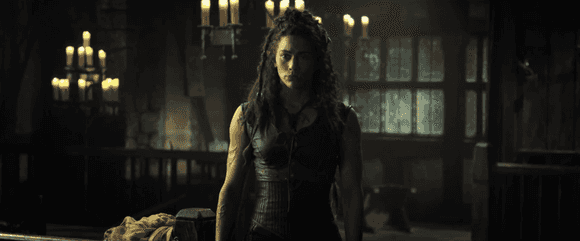
Nerdist nabbed an answer to a question in my previous post. It’s Garona.

From WoWWiki:

Garona Halforcen is a half-orc half-draenei quest giver for the Horde in the Twilight Highlands. Like most others, she believed she was half-human until the truth was revealed to her. She is an assassin and a spymistress.

From the Nerdist interview, it appears Garona is half-orc half-human, which, in the visual language of the Warcraft Movie, seems to justify her unanimated self. I don’t think it works and still lends itself to an awkward visual balance.

Daniel Wu, playing the part of Gul’dan:

If they don’t seem real, it’s going to be hard as an audience to get into the character. But they are very real. And they are very compelling as CG characters. Like two minutes into the film, you forget that they’re actually CG characters.

They don’t seem real. However, I said the same of Avatar. And after a few minutes into that film, I was onboard.

Warcraft Plot

Wikipedia:

Azeroth stands on the brink of war as its civilisation, led by the humans, faces a fearsome race of invaders: orc warriors fleeing their dying world, Draenor, to find their place in another. As a portal opens to connect the two worlds, known as the Dark Portal, the humans face destruction while the orcs face extinction. Anduin Lothar (Travis Fimmel), leader of the humans, and Durotan (Toby Kebbell), leader of the orcs, are then sent on a collision course that will decide the fate of their family, their people and their home, in which war has many faces and everyone fights for something.

Maybe the trailer wouldn’t have been such a miss if they stuck to this description?

Regarding my last post, how come one of the female orcs (Garona? Draka?) doesn’t get the GCI treatment? Seems to heighten the awkward balance between the animated and unanimated.

Warcraft movie, female character

Warcraft and Toontown

https://www.youtube.com/watch?v=2Rxoz13Bthc

News of a Warcraft movie with the involvement of Duncan Jones and Legendary Pictures has had me excited for years now. Unfortunately, this trailer does not.

I’ve eagerly awaited every Blizzard in-house cinematic since Starcraft’s in 1998. (If I recall correctly, it shipped on the Warcraft II: Beyond the Dark Portal disc.) I don’t believe Blizzard’s in-house cinematic team had much to do with this film. And if true, that is a sad fact.

In the games, the orcs’ robust physique is met with nearly as robust human physique. Blizzard’s own in-house cinematics reflect this as well:

https://www.youtube.com/watch?v=akzF_rU1Fqg

Physique aside, the use of real actors against what appears to be a solely computer-generated backdrop and animated rivals is jarring. (See also the Star Wars prequel trilogy and The Hobbit) I thought we were working passed this. I thought the gag of cartoons working in Hollywood was in the process of being shuddered. Confused about how real actors would look in either the orc or human role, I figured they’d both be bolstered by CGI. I figured wrong. On the upside, the close-ups of the orcs look great.

I’m not a World of Warcraft player, but within an hour or so of the Warcraft Movie trailer premier, a cinematic trailer for World of Warcraft: Legion, the upcoming WoW expansion was released. This is the kind of visual consistency I was hoping for:

https://www.youtube.com/watch?v=eYNCCu0y-Is

All I’m saying is the unbelievable visual inconsistency of animated characters and backdrops alongside real actors is tired. Give me real or fake. If both, let’s stick to the Who Framed Roger Rabbit and Space Jam gags.

How Videogames Are Saving the Symphony Orchestra

Sarah E. Needleman, The Wall Street Journal:

In Philadelphia, the 80-year-old Mann Center has held videogame concerts since 2012. Representatives say the shows attract as many as many as 6,500 attendees, roughly double the average attendance at classical concerts.

The growing popularity has helped offset a decline in U.S. orchestra ticket sales. Over the past decade, such sales have declined at an average annual rate of 2.8%, according to a soon-to-be-published report commissioned by the League of American Orchestras, an advocacy group.

While I had known of the popularity of these concerts with Video Games Live, whose album Kickstarters for Volumes 3 and 4 raised $285,081 and $187,646 respectively, et al., I had no idea of this level of success. Likewise, I was a bit surprised to see “The Legend of Zelda: Symphony of the Goddesses” perform on “The Late Show With Stephen Colbert”, but a bit less so now.

The piece continues:

Unlike classical-music performances, videogame shows feature arrangements that blend looping tracks of music designed to match various moments in a game, such as a slow, eerie medley of piano, percussion and string as the videogame character navigates a castle dungeon.

I think there’s something here. Two years back, in a post titled 1985: Burst and Bloom, I wrote the following:

The sounds, visuals, and interactivity provided a pool of imagination. The limitations of early consoles could not provide orchestral arrangements. Instead, repetitious patterns were drilled into our heads. They not only encapsulated the game we were playing, but they opened the world outside to a new soundtrack, creating a wealth of memories that could be tapped into from a few simple chirps. Hearing these primitive arrangements evolve felt like experiencing the birth of music. As hardware progressed, so did the complexity if the music. Repetitive pieces turned into grand and iconic themes, each game re-shaping the idea and importance of video game music.

Back to the WSJ piece, a quote from illustrator Mathew Grigsby:

I developed a taste for classical music through videogames.

I echo this sentiment.