Editor’s Choice: EDGE Extended

EDGE Extended

What is seemingly simple on the outside may spike your nostalgia on the inside.

Like many, I am often guilty of falling head over heels for media that pays homage to my childhood hobbies. In the case of video games, very few have been able to tap into my childhood gaming roots like that of Mobigame‘s EDGE Extended. While the game may be an additive to the original EDGE, it succeeds as its own title.

Gameplay

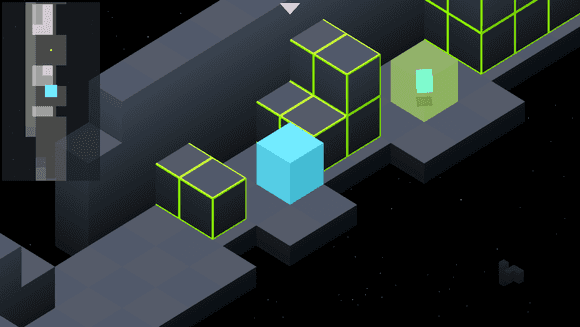
EDGE Extended’s core objective is to move your cube from point A to point B as quickly as possible without falling off of the edge of the level, all the while collecting prisms on the way. Your cube’s movement consists of crawling along the ground or scaling other cubes of the same height within a level’s layout. Boundaries are not forsaken therefore one false move could put you over the edge, racking up your death count, and harming your final score.

Level scoring ranges on a scale of A to D with special S (Professional) and S+ (EDGE Master) rankings based on completion time, prisms collected, and number of deaths (or lack thereof). Hang-time bonuses are given when the player holds the balance of their cube during mid-climb without completing the climb completely, a la manuals/grinds/plants in Tony Hawk’s Pro Skater.

Each level offers a unique design and mechanics that keep the player riveted and guessing. The rate at which this simple 3D game is able to innovate is mind-blowing, offering unassuming players nostalgia of their first play through of Super Mario 64. Many popular platforming mechanics are aplenty throughout each level such as triggers that open bridges, temporary floors, shadow cubes, and even a Morph Ball-esque ability that provide additional challenges in reaching the each level’s goal.

Visuals

EDGE Extended’s visuals are reminiscent of the original TRON: blocky, greyscale level design sprinkled with lines of glowing hue. At initial glance, the game may seem a bore, however it’s perfectly timed moments of shimmering colors send the mind racing back to a time of ’90s-era sparkly stickers and Lisa Frank products, perfect for today’s aging gamer.

Sound

Simply put, the sound design is sharp and smart. A plethora of shimmering chimes move the player through the menus while the soft cushioned thud of the cube satisfies the auditory sense. If that is not enough, the EDGE Extended soundtrack pays homage to the 8/16/32/64-bit melody heavy video game scores of yore such as Sonic the Hedgehog, various menu music, and Super Mario 64 (I may be obsessed with this game…).

Overall

EDGE Extended is a love letter to historic platformers, memorable mechanics, and the video game music of yesteryear in the form of a casual iOS game. EDGE Extended is a game worthy of a $30 price-tag offered for only $3!


Trailer

https://www.youtube.com/watch?v=hfpv-18KKZw&feature=emb_title

EDGE Extended is available for iOS on the App Store.


Originally published on TheStarrList.com

2013: The Year of 4K

If CES 2013 has proved one thing, it’s that 2013 will be the year of 4K. SonyLGSamsungSharp, and Panasonic have all announced that they will be releasing 4K TVs in 2013. If you are unfamiliar with 4K, check out Wikipedia. In short, it is a screen resolution 4 times that of your 1080p HD TV. It is also standard that digital cinema is delivered in. When you brought your children (and yourself) to watch Wreck-It-Ralph this fall, chances are it was being delivered to you in 4K. But aside from this, why am I so excited about the advancement?

When Apple released the redesigned iMac line in 2009, it opened my eyes to a greater offering of pro-sumer grade products. I was amazed at the amount of pixels in the iMac’s IPS enabled LCD displays. Apple decided that it’s most popular desktop line would not rest on the laurels the industry set at 1080. Instead, they decided to redesign their all-in-one desktop with a display capable of a native resolution of 2560 x 1440. Thus began my inkling that the time of 1080 would be nearing its end.

In 2010, two key technological advancements hit. In June, Apple released the long awaited iPhone 4. Aside from its gorgeous design and custom A4 processor, it housed a 640 x 960, 326 ppi Retina display; a consumer electronic smartphone with pixels smaller than the naked eye can distinguish at optimal operating distances. I was fortunate enough to take one home the evening of its launch and, to my surprise, I had a hard time falling asleep. I kept waking up to unlock my iPhone as if I had never seen one before. This display was nothing I had ever fathomed. At this point I knew displays would not be getting clearer than this. Only larger. A plateau had been reached followed only by iPad (3rd generation) and now the MacBook Pro with Retina display; bigger displays.

Shortly after, in July of 2010, YouTube released a playlist of 4K streaming videos. While it goes without saying that a majority of the public did not have access to the 4K resolution projectors and/or displays needed to view these natively, these videos did shake the Earth in terms of size. Each video clocked in at roughly 2 minutes and took nearly 10-20 minutes to load, opening our eyes to just how slow our broadband connections really were. While the idea was certainly more appealing than the result, the 4K test footage was another step toward an inevitability.

Over the course of the next few years, TV manufacturers and video game and film studios began to offer gimmicks. Super-high refresh rates that magically turned Star Wars and The Godfather into cable soap operas. In a push to re-invent split screen multiplayer, Sony developed a TV specifically for Playstation 3 that, when wearing special glasses, allowed two players to only see what their character was doing, hiding the other’s from view. Then 3D, the biggest gimmick of them all (and the one loads of us fell for).

As quickly as consumers latched on to those expensive TV’s and weighty, battery powered 3D glasses, they were just as quickly setting them down. It didn’t work in the ’80s, it wasn’t going to work now. Home-bodied consumers didn’t want to worry about having enough glasses for everyone or what angle to sit t0 allow for the most people to see the screen at once (usually 2). Even Nintendo’s glasses-free-3D 3DS couldn’t keep up the hype. Gamers quickly began disabling it’s 3D capabilities in lieu of increased frame-rate and battery life. It seemed that the only venue 3D would work in was the movie theater.

Now, in 2013, we finally have something to truly look forward to. 4K television. What makes 4K different than any other failed gimmick? Increased clarity and size. The same reasons we left VHS for DVD and DVD for Blu-ray. Only now has out technology finally caught up. Most digitally projected film is shot and projected at 4K resolutions. While not being able to release any other 2D technology before reaching cinema quality may make the TV industry shutter, it will provide consumers with huge piece of mind that they can comfortable settle into a medium.

This is all great for consumers in the present, but what does it mean for the the future of the industry? What new gimmick can be sold to us after 4K? 3D 4K? 8K? Roll back to 35mm? How will the TV and cable industry catchup and retool their studios and infrastructure to deliver 4K content? If 2 minutes of 4K footage takes 20 minutes to load over current broadband speeds, could this a step back for streaming content?

Sony has already announced that they will be offering ”Mastered in 4K” Blu-ray discs (upscaled 1080 content). With the rights and a cornerstone on Blu-ray, Sony is sure to be first to market with true 4K physical media. I would not be surprised if 4K ends up to be the backbone of the imminent Playstation 4. While the initial prices for these TVs are a bit lofty, we should all be wise enough to realize that prices will begin to fall in the next few years, making these behemoths affordable for the average consumer.

So why am I so excited? The digital cinema standard of 4K will now be in our households. 4K is not a gimmick but a quality of picture and resolution we’ve had to buy a ticket to view. Until I am able to afford an IMAX screen, projector, and reels, I will be content with 4K quality. The gimmicks of yesteryear that were staving off the inevitably of 4K enabled TVs may finally be over! That is until TV manufacturers find the next wave of gimmicks (or until James Cameron decides we need to live in Pandora… oh wait). Wave goodbye to the HD catch-phrase. 4K is here… and here to stay for a long while.

Finding The Rails

Until college graduation, my life was on rails. I knew exactly what was supposed to happen, how to make it happen, and how long it would take to get there; there was an eventual goal. While one could see the light at the end of the tunnel, there were meandering duties and hobbies to be had: being in a band, getting your drivers license, entering and exiting relationships, maintaining a job, mowing the lawn, etc.

Then graduation comes. The idea that the path you’ve set for your life is no longer attainable or no longer interests you becomes a reality. You seem to be stuck with these meaningless tasks and jobs without a clear path to get you back on track.

The majority of video games today contain one large objective, a rail, and many minute “side-quests.” While the player treks through the game, the concepts of time and duties never impede on the story. In Skyrim, for example, if you want to become a scholar, there is time for that. If you want to become a mage, there is time for that. So on and so forth. All the while, the main quest remains to be tackled. Differentiating from reality, the game’s main quest never goes away and remains the game’s eventual goal. The real-life anxiety manifested by the harbinger of time never has an effect on the in-game character

Paralleled against modern video games, it seems as if many people get caught up in the little things, duties or side-quests, which in turn pull their focus away from the larger picture or rail. Most of us have many dreams and aspirations but the more we are caught up in routine and tending to the “small stuff,” the more impossible attaining these dreams appears to be.

I spend 40-hours a week in a cyclic job as a computer technician; no internal, rewarding progress made. While I better hone my skills in the realms of customer service and technical expertise, it does not get me any closer to writing a book or script or blog, building a video game or film, hosting my own entertainment news podcast, or becoming a Walt Disney Imagineer. The exhaustion created from my routine day job encourages me to spend my free time with my significant other and/or family.

I now realize that when presented with unlimited options and limited time, I am unsure of the path I would like to take. I consider myself a jack-of-all-trades; good at many things, exceptional at nothing. Amongst my college education, work, and hobbyist writing endeavors, I attempt to dabble in many fields, all in an attempt to discover my passion with the limited time I have to eventually decided on a career.

The recent post at HelloGiggles.com titled “Your Best Life” by Sarah May Bates elaborates on the idea that in the end, humans tend to regret working so much rather than appreciating time with family, traveling the world, and pursuing their passions. It also reflects on the idea that the little things get in our way:

“We feel we have to do everything or else the structure of life might fall apart. The mental energy we do reserve for ourselves is usually spent regretting something or worrying about something to come. Obsessing over things that cannot be affected with more obsessing.” – Sarah May Bates, HelloGiggles.com

While this passage is true, it does not take into account the fact that we work to make a means to enjoy life outside of work. The challenge I find is filling your work-life with a passion. If we are able to replace the forty-hours per week we invest in monotonous jobs and substitute it with our passions, we will inevitably end up with a more fulfilling life.

The other dilemma we struggle with regarding time is that it is a limited commodity. To my original point, in games such as Skyrim, there is time to seek out a multitude of professions and quests. In reality, we believe that there are life-markers that will lock us into our current position, such as getting married, having a child, and owning a house. I eye these markers with the idea that if I don’t reach my goals by the time these life-markers come around, I will have missed my chance.

A game that actually allows players to experience the anxiety of time is The Sims. Something The Sims creators got right from the inception of the franchise was creating an anxiety within the player, forcing them to juggle priorities as their lives get more complicated: manage more and more relationships, have children, get to work on time. Unlike Skyrim, The Sims compresses the element of time to a point that makes the player feel helpless against it, unable to concentrate on their main story and instead are forced to manage the small tasks. In fact, the original Sims game provides no rails at all and instead forces the Sim to carry out chores until the day they die, creating the perfect example of why humans need eventual goals; not just buying new furniture.

I conclude with the idea that I am beginning to struggle with the thought of leisurely activities. Escaping to the world of video games, where one can take comfort in knowing they have absolute control of their own fate along given rails, fills me with anxiety. I know that my own fate and life-rails are constantly in a state of chaos and uncertainty. Henceforth, this is the struggle. Unable to calm oneself with control and limitations because one is too concerned over finishing every side-quest life throws at them and continuously searching for their own rails. Humans need rails as much as games do.


Originally published at TheStarrList.com